
Attendance Shortage: What Really Happens and How to Fix It
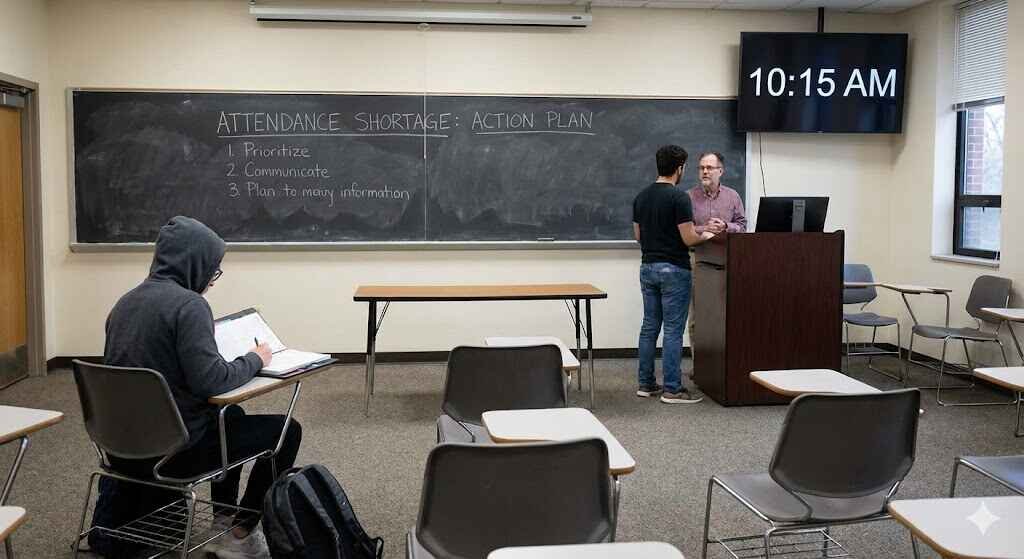
Missing too many classes? Every semester, thousands of students panic when they realize they’re sitting at 70% or 72% attendance—just below the 75% minimum most colleges require.
I’ve seen this situation play out hundreds of times. Some students bounce back. Others end up watching their friends take exams while they’re stuck on the sidelines. The difference? Knowing what to do and doing it fast.
What Counts as Attendance Shortage
Simple math: If your college requires 75% attendance and you have 100 classes in a semester, missing more than 25 puts you in the red zone.
But here’s what most students don’t realize—it’s not just about one subject. You need 75% in EACH subject separately. You might have 80% attendance in Math but only 68% in Physics. That Physics number alone can stop you from taking exams.
Your college calculates this differently:
- Some count lab and lecture separately
- Others combine them
- Medical leaves may or may not count (check your college rules)
The Real Consequences Nobody Talks About
You Can’t Take Exams
This is the big one. Fall below 75%, and most colleges won’t give you an admit card. Doesn’t matter if you studied all night or could ace every paper. No attendance, no exam. Period.
I’ve watched prepared students sit out exams because they thought “it’ll be fine” until the last week. It’s never fine.
Your Semester Gets Wasted
Can’t take exams? That semester doesn’t count. You’ll attend next semester’s classes but stay stuck at your current level. Your friends move ahead. You repeat.
This costs you time and money. If you’re on a scholarship, you might lose it. If you’re on a student visa, this creates problems with your duration of stay.
Your Record Takes a Hit
Colleges keep attendance records. When you apply for jobs or higher studies, some places ask for it. A pattern of poor attendance makes you look unreliable, even if you had valid reasons.
Why Students Actually Miss Classes
Let me be straight with you. Sometimes it’s legitimate:
- You were genuinely sick for two weeks
- Family emergency pulled you home
- You’re working part-time to pay fees and shifts conflicted with classes
But often? It’s smaller things that add up:
- Skipping Monday morning classes regularly
- Missing “less important” lectures to finish assignments
- Sleeping through 8 AM classes three times a week
- Taking long weekends by bunking Friday or Monday
Two missed classes per week feels like nothing. Do that for 15 weeks, and you’ve missed 30 classes. If you have 100 total, you’re at 70%. Welcome to shortage territory.
What You Need to Do Right Now
Step 1: Know Your Exact Numbers
Stop guessing. Log into your college portal today and check your attendance percentage in every subject. Write it down. Calculate how many more classes you can miss (if any).
If you’re already below 75%, count how many classes are left in the semester. Can you mathematically recover? If there are 20 classes left and you attend all of them, will your percentage cross 75%? Do the math now.
Step 2: Talk to Your Class Coordinator
Book an appointment this week. Not next week. This week.
Go prepared:
- Print your attendance record
- Bring any medical certificates, family emergency proof, or documentation
- Don’t make excuses, but do explain genuine reasons
- Ask what options exist
Most coordinators will help students who come early and show they’re serious. They can’t help students who show up three days before exams begging for mercy.
Step 3: Apply for Condonation
Condonation means the college officially excuses your attendance shortage. Not every college offers this, and not every case gets approved, but if you have documented reasons (medical issues, family emergencies), you have a shot.
Write a formal application:
To,
The Head of Department
[Department Name]
Subject: Request for Attendance Condonation
Respected Sir/Madam,
I am [Your Name], Roll No. [Number], second-year B.Tech student. My current attendance stands at 72% due to [brief, specific reason: medical condition/family emergency]. I have attached supporting documents.
I request you to kindly condone my attendance shortage and permit me to appear for the semester exams. I assure you this will not repeat.
Thank you.
Keep it short. Attach proof. Submit it to your HOD, class coordinator, and keep a copy.
Step 4: Attend EVERYTHING From Now On
Obvious? Yes. Done by everyone? No.
Starting today, attend every single class. Even the ones you think don’t matter. Even the 8 AM lecture when you’re tired. Even the Friday afternoon class when everyone’s bunking.
You need to show you’re serious. If you’re asking for condonation or special consideration, they’ll check if you improved after you realized the problem. Continued bunking kills any sympathy you might have gotten.
Special Cases: When You Might Get Relief
Medical Issues
If you were hospitalized or under treatment, colleges usually consider this. But you need proper documentation:
- Doctor’s certificate on letterhead with registration number
- Dates of treatment clearly mentioned
- Hospital discharge summary if you were admitted
Vague medical certificates don’t work. “Student was unwell” doesn’t cut it. It needs specifics.
Family Emergencies
Death in the family, parent’s serious illness, unavoidable circumstances—these get considered if documented. You’ll need proof: death certificate, hospital records, whatever validates your claim.
Mental Health
This is tricky because many colleges don’t officially recognize mental health as grounds for attendance shortage. But times are changing. If you were dealing with depression, anxiety, or other mental health issues and were seeing a counselor or psychiatrist, documentation from them can help your case.
What About Final Year Students?
Final year is different. Some colleges are stricter (you’re about to graduate, show some discipline). Others are more lenient (you’re so close, let’s get you across the finish line).
If you’re in final year with attendance shortage, emphasize:
- Your placement concerns (many companies check attendance)
- This is your last semester
- Your overall academic record if it’s good
- Any extracurricular achievements
Final year students sometimes get offered project work or extra assignments to compensate for shortage. Ask about this option.
Detention vs. Debarment: Know the Difference
Debarment = You can’t sit for exams this semester. Your attendance shortage stops you at the exam hall door.
Detention = You failed to meet overall academic requirements (maybe attendance, maybe grades, maybe both). You’re held back and must repeat coursework.
You can be debarred without being detained. You might be detained even with okay attendance if you failed too many subjects.
The Harsh Truth About “It’ll Be Fine”
It won’t be fine if you ignore it.
I’ve seen students with 73% attendance in April thinking they have time. Then May comes, and there are only 10 classes left. Even if they attend all 10, they can’t reach 75%. The math doesn’t work.
I’ve also seen students who realized the problem at 78%, made changes, and finished at 82%. They graduated on time with their friends.
The difference? Acting fast versus hoping it sorts itself out.
Your Action Plan for Next Semester
Let’s say you’ve managed this semester’s crisis. How do you avoid this mess again?
- Track weekly. Every Sunday, check your attendance. Know where you stand in each subject.
- Build a buffer. If you need 75%, aim for 85%. Life happens. Illness happens. Having extra percentage gives you room for unexpected absences.
- Attend first, study later. Students often skip class to study for exams or complete assignments. Bad trade. Attend the class, then manage your study time. Missing class hurts you twice: attendance drops and you miss whatever was taught.
- Set an alarm for early classes. Seriously. Half of attendance problems come from sleeping through morning lectures. Fix your sleep schedule or set multiple alarms.
- Talk to your employer if you’re working. If job shifts conflict with classes, address it now. Some employers accommodate student schedules. Others don’t. Better to know early and make changes if needed.
Final Word
Attendance shortage feels like a bureaucratic hassle, but it’s really about showing up for your own education. You’re paying for these classes (or someone is). Your degree depends on completing them. Your future employers will expect you to show up reliably.
Handle this situation now, learn from it, and don’t repeat it. You’ve got this.